
Maintaining a tidy and organized children’s play area can feel like a constant battle. However, with the right storage solutions, transforming a chaotic space into an efficient and aesthetically pleasing environment is achievable. This guide explores various options, from practical bins and shelves to creative repurposing ideas, helping you find the perfect fit for your child’s toys and your home’s style.
We’ll delve into the pros and cons of different materials and designs, offering practical tips for organizing toys by type, age, and frequency of use. Safety considerations are paramount, and we’ll address potential hazards and how to mitigate them. Ultimately, this guide aims to empower you to create a functional and safe play space that fosters creativity and imaginative play.
Types of Toy Storage Solutions
Choosing the right toy storage solution is crucial for maintaining a tidy and organized children’s room. The ideal solution will depend on factors such as the amount of toys, the available space, and the age and preferences of the child. Consider factors like durability, accessibility for children, and aesthetic appeal when making your selection. The following table categorizes various options to help you make an informed decision.
Toy Storage Solutions by Material and Design
| Material | Design | Pros | Image Description |
|---|---|---|---|
| Plastic | Bins | Lightweight, durable, easy to clean, often inexpensive. | A colorful, stackable set of plastic bins with various sizes, possibly featuring handles for easy carrying. The bins are translucent, allowing for easy identification of the contents. |
| Fabric | Storage Cubes/Ottomans | Soft, lightweight, often collapsible for easy storage when not in use, can be aesthetically pleasing. | A set of fabric storage cubes in a variety of pastel colors, possibly with images of animals or characters. Some cubes may be designed as ottomans, providing extra seating. |
| Wood | Shelves/Chests | Sturdy, long-lasting, can add a classic or rustic touch to a room. | A wooden shelving unit with multiple compartments, possibly featuring rounded edges for safety. A wooden toy chest with a hinged lid and possibly decorative handles is also depicted. |
| Metal | Wire Baskets | Breathable, lightweight, often stackable, allows for easy viewing of contents. | A set of wire baskets in various sizes, possibly with colorful fabric liners. The baskets are lightweight and easily stackable, with visible contents. |
Pros and Cons of Different Toy Storage Solutions
The choice between plastic, fabric, wood, or metal toy storage solutions involves weighing several factors. Plastic bins are generally inexpensive and easy to clean, but might not be as aesthetically pleasing as wooden chests. Fabric storage cubes offer a softer, more flexible option, but may not be as durable. Wooden shelves and chests offer durability and a classic look but can be more expensive.
Metal wire baskets provide breathability, but might not be suitable for all types of toys. Ultimately, the best choice depends on individual needs and preferences.
Space-Saving Storage Solutions for Small Rooms
Space-saving storage is particularly important in smaller children’s rooms. Under-bed storage containers, wall-mounted shelves, and vertical storage units maximize vertical space and minimize floor clutter. Utilizing the space under beds with pull-out drawers or rolling containers keeps toys out of sight and organized. Wall-mounted shelves can display favorite toys while saving floor space. Vertical storage units, like tall, narrow bookcases or multi-tiered storage towers, make efficient use of vertical space.
These solutions maintain organization while preventing a cramped feeling.
Organization Strategies for Toys
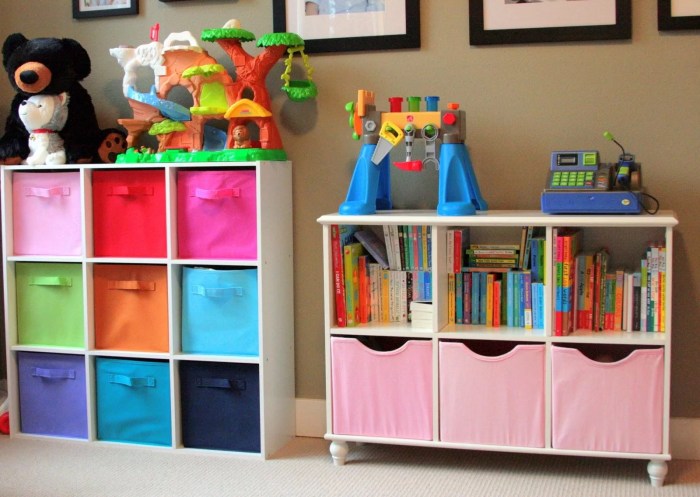
Effective toy organization is crucial for maintaining a tidy play area and fostering a child’s independence. A well-organized space makes it easier for children to find their favorite toys, put them away, and participate in tidying up. This leads to less frustration for both children and parents, and promotes valuable life skills. A systematic approach, tailored to the child’s age and developmental stage, is key to success.
Implementing a robust toy organization system involves categorizing toys based on type, age appropriateness, and frequency of use. This layered approach ensures efficient storage and easy access, minimizing clutter and maximizing play space. Clear labeling further enhances the system’s effectiveness, allowing children to participate actively in the organization process.
Organizing Toys by Type, Age, and Frequency of Use
A multi-faceted approach to toy organization considers several factors to optimize storage and accessibility. The following system combines categorization by toy type, age appropriateness, and how often the toy is used. This helps to manage the volume of toys and ensures that frequently used items are easily accessible.
- By Type: Group similar toys together. Examples include building blocks in one container, dolls and accessories in another, and vehicles in a third. This makes it easier for children to find what they are looking for and promotes imaginative play by grouping related items.
- By Age Appropriateness: Separate toys based on the child’s developmental stage. Younger children’s toys, which may pose a choking hazard, should be stored separately and out of reach of older siblings. This ensures safety and prevents accidental damage to toys intended for older children.
- By Frequency of Use: Frequently used toys should be easily accessible, perhaps in lower shelves or open bins. Less frequently used toys can be stored in higher shelves or less accessible locations. This minimizes clutter in high-traffic play areas.
Practical Tips for Labeling Storage Containers
Clear and engaging labels are essential for a successful toy organization system, especially for young children. Labels enable children to participate in the organization process, reinforcing the importance of tidying up and promoting independence. The following tips highlight how to create effective labels that support both organization and child engagement.
- Use Pictures and Words: Combine simple pictures with words to make labels easily understandable for children of all reading levels. A picture of a car next to the word “Cars” is more effective than just the word “Cars” for a young child.
- Use Bright Colors and Bold Fonts: Attractive labels are more engaging for children and encourage their participation in tidying up. Consider using colors that match the toy type for added visual appeal.
- Keep it Simple: Avoid overly complex labels. Short, clear words and easily recognizable pictures are most effective for young children.
- Laminate Labels: Laminating labels protects them from wear and tear, extending their lifespan and maintaining their readability.
Comparison of Organization Methods Across Developmental Stages
The most effective organization method depends significantly on the child’s age and developmental abilities. Younger children benefit from simpler systems with fewer categories and easily accessible storage. As children grow, they can handle more complex systems and participate more actively in organization.
- Toddlers (1-3 years): Focus on large, open bins with clear labels and pictures. Limit the number of categories to minimize confusion. Toys should be easily accessible to encourage independent play and cleanup.
- Preschoolers (3-5 years): Introduce more specific categories and labeled containers. Involve children in the organization process, teaching them to sort and put away their toys. Consider using color-coded bins to further aid organization.
- School-aged Children (6+ years): Children at this age can handle more complex organizational systems with multiple categories and labeled shelves. Encourage them to take responsibility for maintaining their own toy storage areas.
Creative Storage Ideas
Transforming toy storage from a chore into a fun and aesthetically pleasing element of a child’s room is achievable with a little creativity. Repurposing everyday items and incorporating decorative elements can significantly enhance the room’s overall design while effectively managing toy clutter. This section explores unique and practical approaches to achieving this.
Clever storage solutions don’t have to be expensive or complicated. Many innovative ideas utilize readily available materials and simple DIY techniques, resulting in both functional and visually appealing storage options.
Repurposed Item Toy Storage
Turning ordinary household items into imaginative toy storage solutions adds a unique charm to a child’s room while promoting sustainability. The following examples illustrate the versatility of repurposing.
- Old Suitcases: Vintage suitcases, even if slightly worn, can become charming toy chests. Line them with fabric for a softer touch and use them to store plush toys, dolls, or smaller games. Consider painting them bright colors or decorating them with stickers to match the room’s theme.
- Wooden Crates: Stackable wooden crates, often found at flea markets or craft stores, offer a rustic and versatile storage option. Paint them in vibrant hues or leave them natural for a more minimalist look. They’re perfect for storing building blocks, cars, or larger toys.
- Fabric Baskets: Large fabric baskets, in various sizes and patterns, provide a soft and flexible storage solution. They can be easily moved and tucked away, and their soft nature makes them ideal for stuffed animals or blankets.
DIY Toy Storage Solutions
Creating your own toy storage offers complete control over design and functionality. The following steps Artikel a simple DIY project using readily available materials.
- Materials: Gather wooden planks (or repurpose old pallets), screws, paint, and a saw.
- Construction: Cut the planks to the desired size for the shelves or boxes. Assemble the structure using screws, ensuring stability.
- Finishing: Sand down any rough edges and apply a coat of paint or stain to match the room’s décor. Add decorative elements such as knobs or handles.
Incorporating Toy Storage into Room Decor
Integrating toy storage seamlessly into a child’s room décor requires careful consideration of themes, color palettes, and overall design aesthetics. The storage solutions should complement the room’s existing style, creating a cohesive and visually appealing space.
- Themed Storage: If the room has a specific theme (e.g., nautical, fairytale, space), choose storage solutions that reflect that theme. For a nautical theme, use baskets with rope accents; for a fairytale theme, opt for whimsical containers with painted castles or enchanted forests.
- Color Coordination: Select storage containers in colors that complement the room’s existing color scheme. Using a consistent color palette creates a sense of unity and visual harmony.
- Open Shelving vs. Closed Storage: Open shelving allows for easy access and display of toys, but can lead to clutter if not managed properly. Closed storage, such as chests or cabinets, keeps toys organized and concealed, maintaining a cleaner look.
Creating a well-organized play area isn’t just about tidiness; it’s about fostering independence and responsibility in children. By implementing the strategies and ideas discussed, you can transform toy storage from a chore into an opportunity to teach valuable organizational skills. Remember to prioritize safety, select age-appropriate solutions, and incorporate your child’s preferences to create a space they’ll love. The result?
A happy child, a clutter-free home, and a sense of accomplishment for the entire family.
FAQs
What’s the best way to involve my child in the organization process?
Make it fun! Let your child choose containers, help label them, and participate in putting toys away. Adjust expectations based on their age and abilities.
How often should I declutter my child’s toys?
Aim for a seasonal declutter, removing broken toys, items they no longer use, or those they’ve outgrown. Involve your child in the process to help them understand the importance of letting go.
Are there storage solutions suitable for outdoor toys?
Yes, consider weather-resistant storage bins or chests specifically designed for outdoor use. These often have features like drainage holes to prevent water damage.


